TTartisan 35mm f/1.4 APS-C
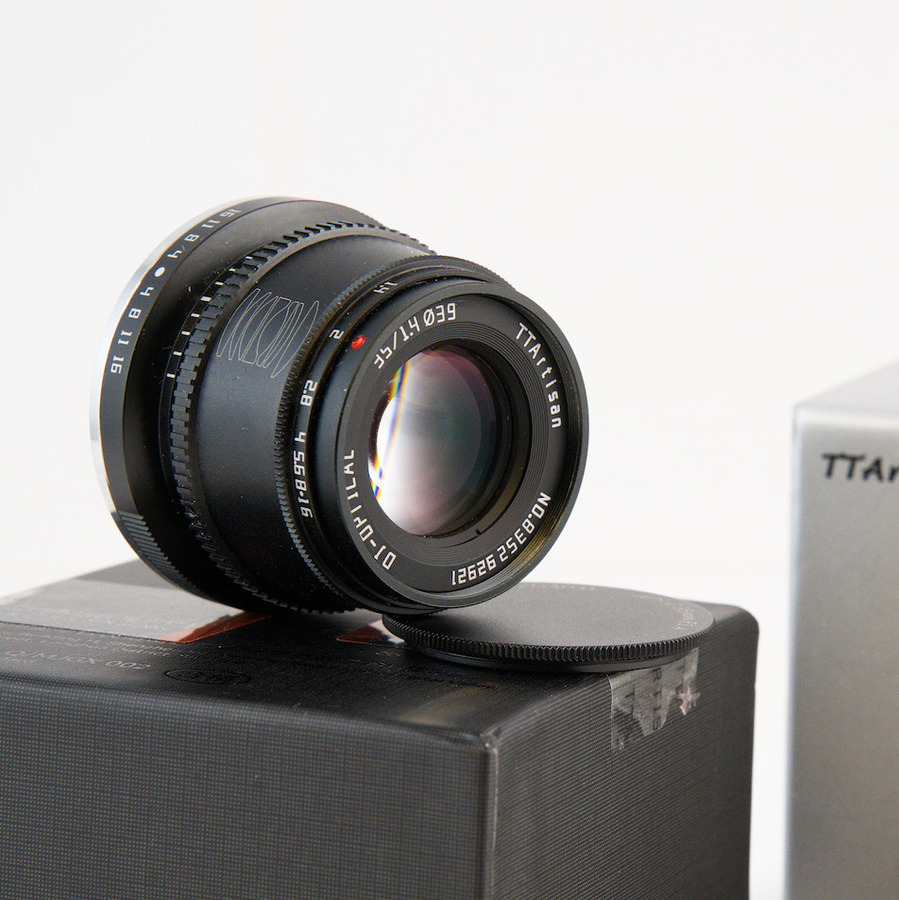
The TTartisan 35mm f/1.4 APS-C. All-metal, smooth focus ring, native E-mount - no adapter required. I shot with it for two and a half months on a Sony A6400, walking Swedish city streets in November and December. Here's an honest account of what it's actually like to use.
There's a specific kind of temptation that hits when you're already happy with your camera but you want something different to shoot with. Not better, necessarily. Just different. The TTartisan 35mm f/1.4 APS-C landed in my hands in November 2025 for exactly that reason - it was affordable, fully manual, compact, and came without the hassle of an adapter. I used it on my Sony A6400 for about two and a half months before switching camera systems entirely.

First impressions
Pick it up and your first reaction is surprise at how solid it is. All metal, no flex, heavier than it looks. For a lens that costs around $80, it feels like it belongs in a more expensive gear bag. The focus ring turns smoothly, and the aperture ring clicks through full stops from f/1.4 to f/16. The markings are clear and well laid out. The 39mm filter thread is an awkward size - not impossible to find filters for, but not the first thing you'd reach for in a shop. Minimum focus distance is 28cm, which is genuinely close and opens up some interesting shooting options.
On APS-C, 35mm gives you a roughly 53mm full-frame equivalent on the Sony E-mount - close enough to the classic "normal" field of view that it covers a wide range of situations. Street, interiors, environmental portraits, close-up details. It's a versatile focal length for a lens this size.


Build and handling
For anyone coming from vintage manual lenses, there's a genuine advantage here: no adapter and none of the usual risks that come with buying old glass. The E-mount version connects directly to the camera, keeping the whole package compact. The camera and lens combo stays pocketable - or at least jacket-pocketable - in a way that a vintage 35mm on an adapter wouldn't. The lens doesn't communicate with the camera electronically, which means no EXIF data for focal length or aperture, and you're using the camera in manual mode throughout. That might frustrate some people. For me it was half the appeal.
Focus is manual, which is the point. Sony's focus peaking helps, and the Sony A6400's magnification mode works well with the smooth focus ring.
Image quality
Wide open at f/1.4, it's soft. Not unusably soft, but you're not going to get razor-sharp results. The centre holds up better than the edges, and there's noticeable vignetting. None of this is surprising at f/1.4, especially at this price. Stop down to f/4 and the sharpness improves significantly - by f/5.6 the frame looks sharper still. If you need it crisp, stop down. If you want atmosphere, shoot wide open and accept the trade-off.
The bokeh is the most interesting part. Ten aperture blades produce smooth, rounded out-of-focus circles, and at closer focusing distances the separation is genuinely pleasing. The rendering isn't swirly like a Helios or brutally smooth like an expensive Voigtländer - it sits somewhere in between, with a gentle quality that works well for environmental subjects.

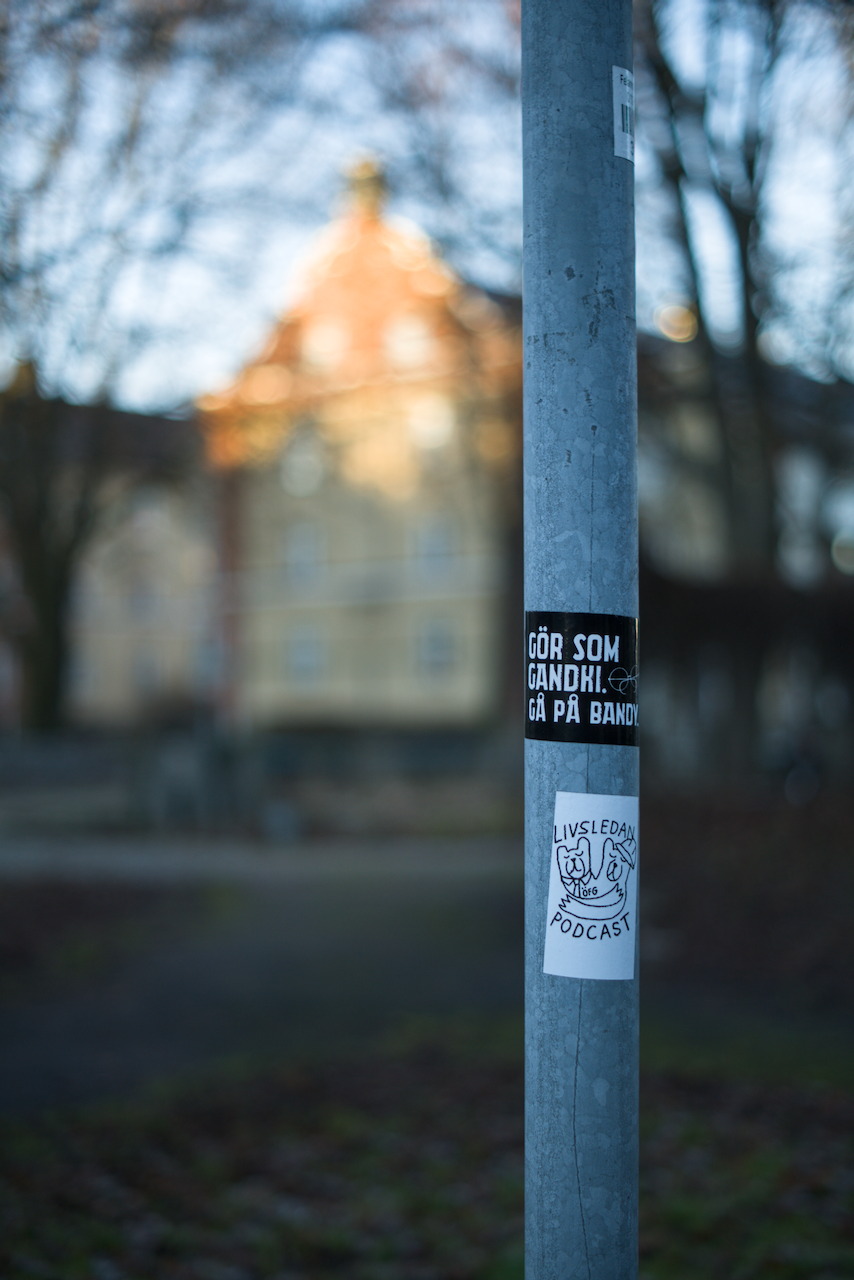
Shoot into the sun or a bright light source and you'll find out fast that the flaring is significant - not subtle, reducing contrast and washing out parts of the frame. The kitchen baking shots below were backlit from a window, and you can see the flare spreading across the image. In some cases it adds warmth and mood. In others it just hurts the image. A lens hood feels like a must.


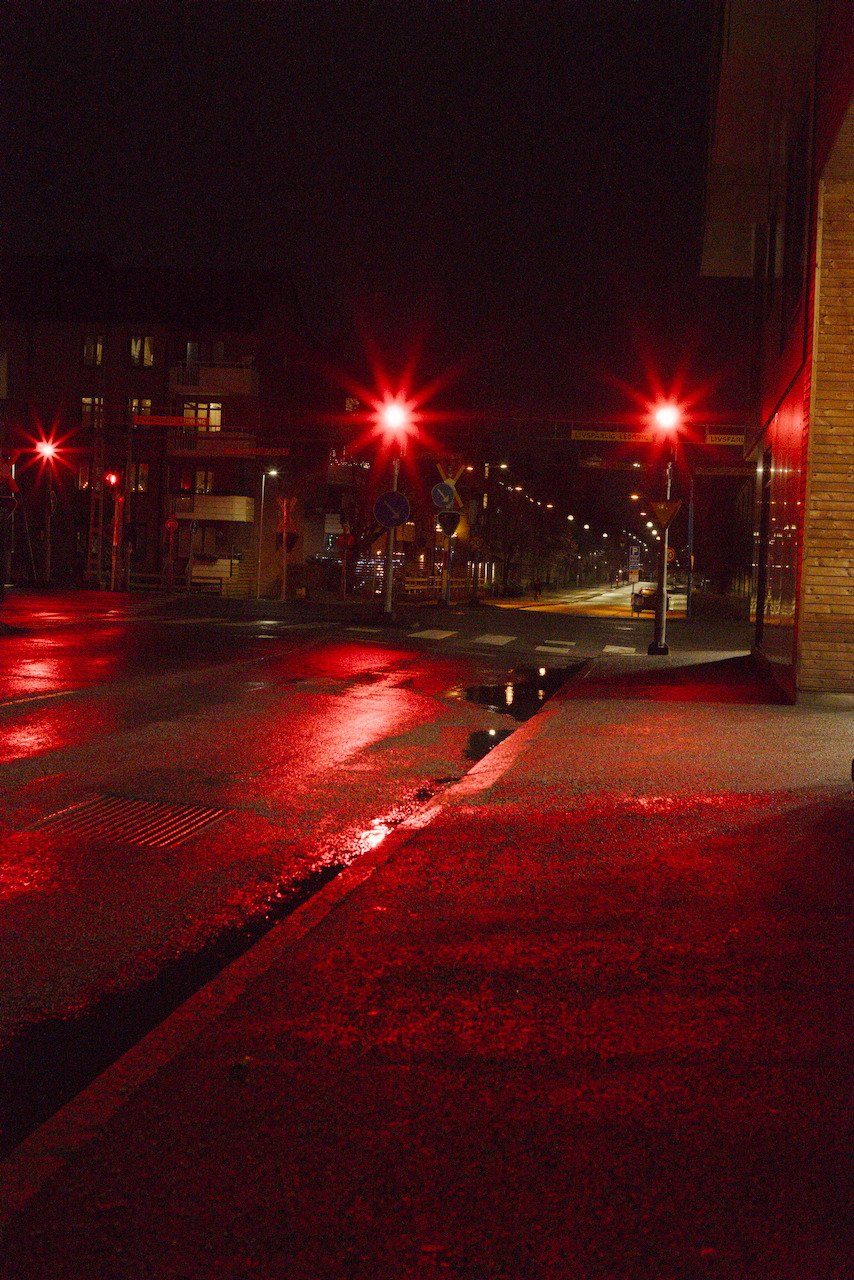
One thing that caught my attention on night shoots: the lens produces 10-spike sunstars from point light sources. On a wet street with red traffic lights reflecting off the asphalt, those spikes add something to the image. It's not the primary reason to buy a lens, but it's a nice side effect of the 10-blade aperture.
Walking around with it
Most of my time with this lens was spent walking around a Swedish city in November and December - dark, often wet, cold enough that operating controls with gloves on became a real consideration. The aperture ring is easy enough to move barehanded, but with gloves it takes deliberate effort to hit the right click stop. Not a dealbreaker, just worth knowing.
As a walkabout lens it earns its keep. The focal length is natural enough that you can frame scenes quickly, the close focus distance lets you get right up to details, and the manual-only operation makes you think about each shot slightly more than you would with autofocus. That's either annoying or useful depending on how you approach shooting.
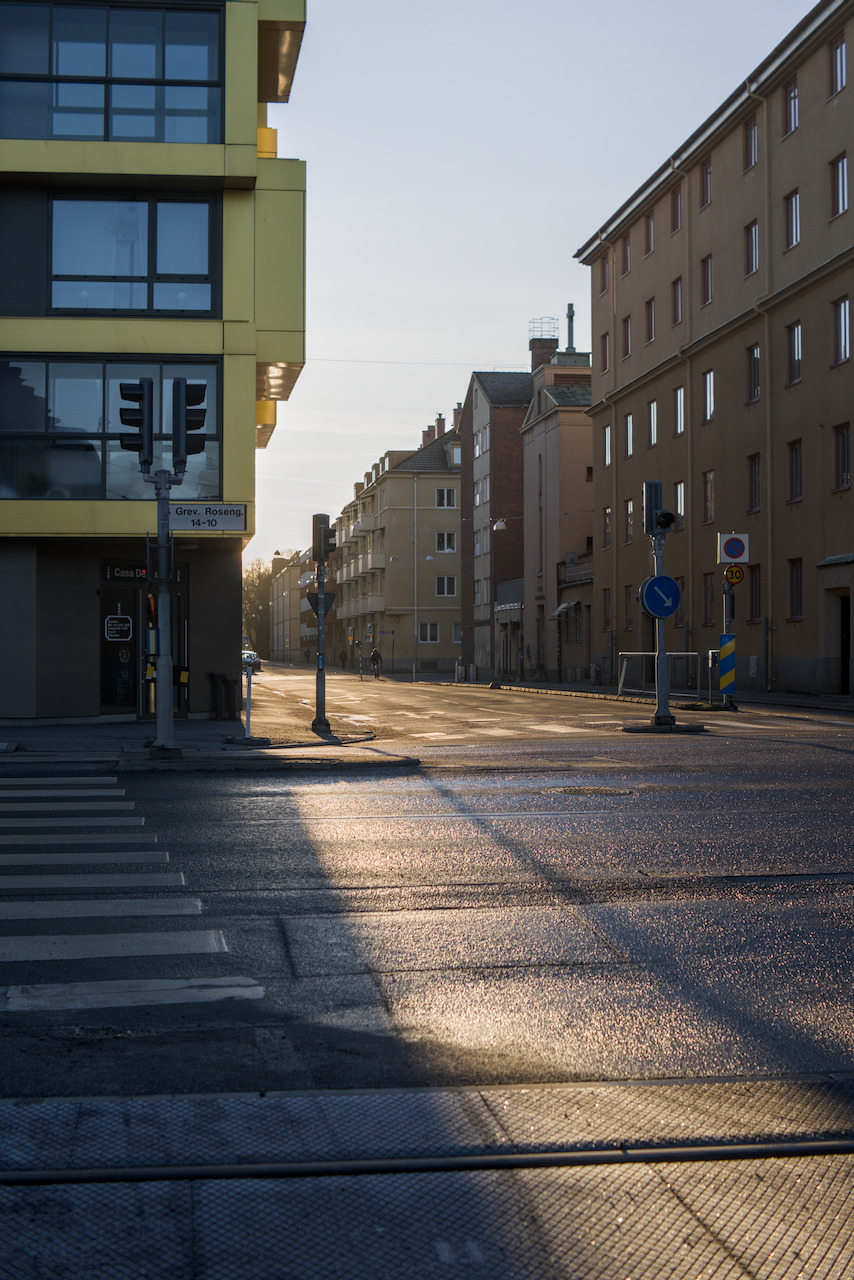
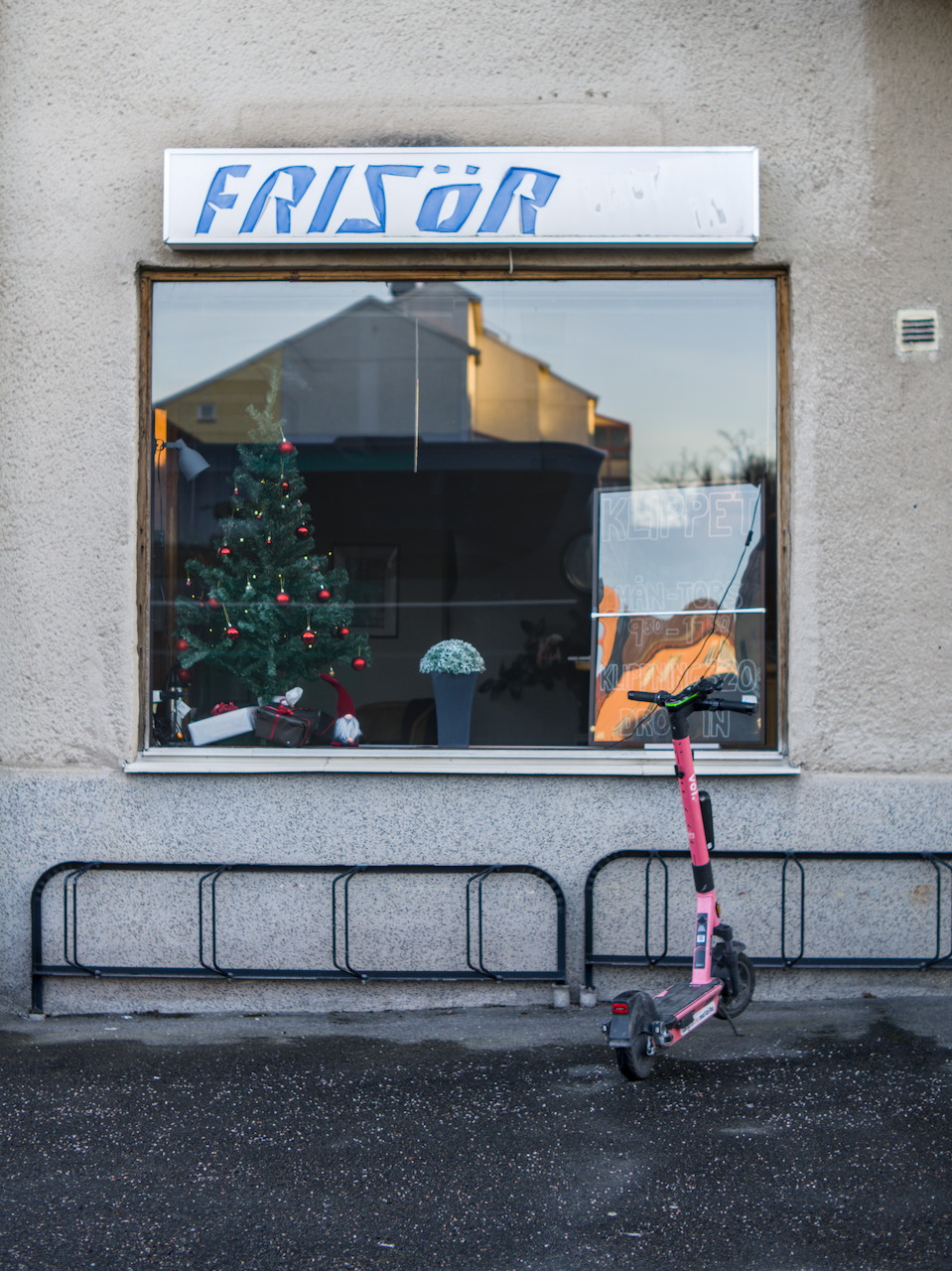
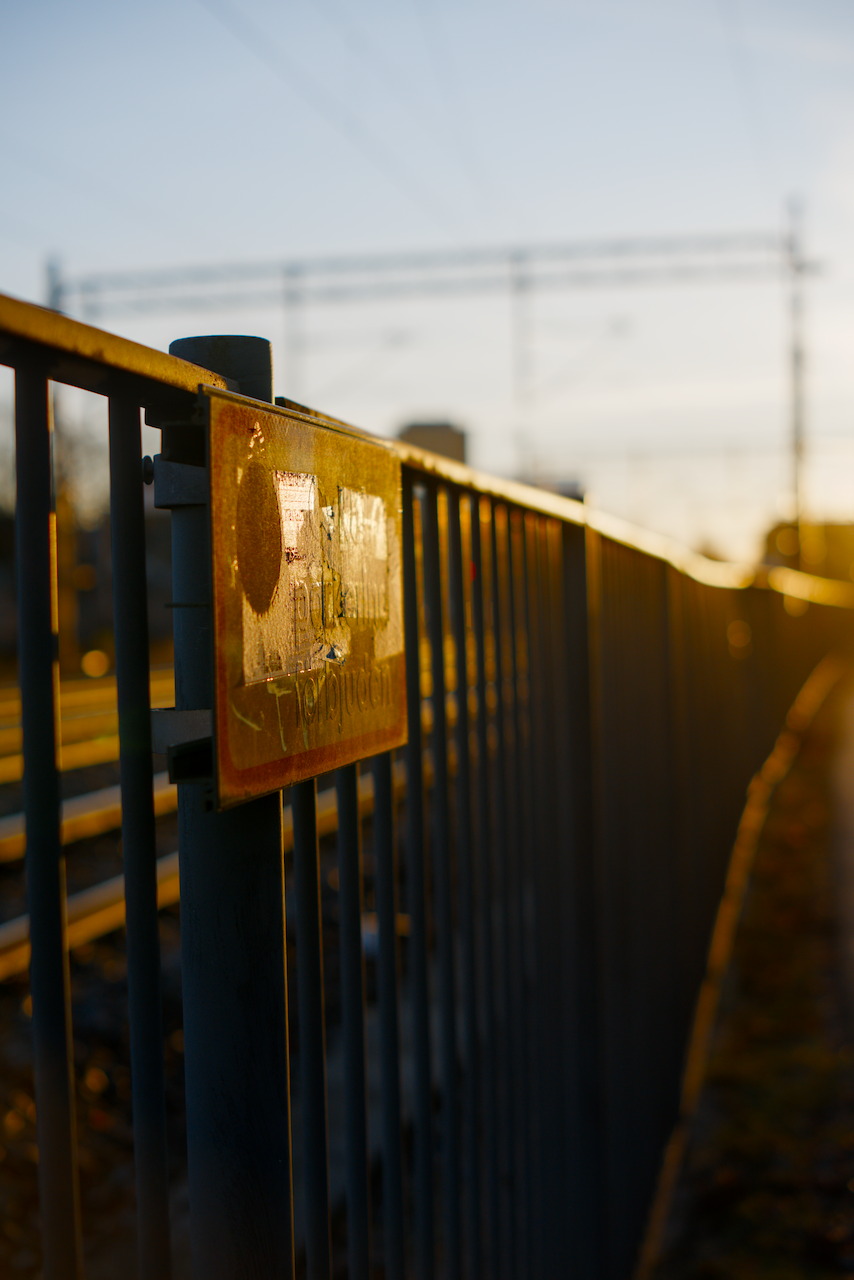
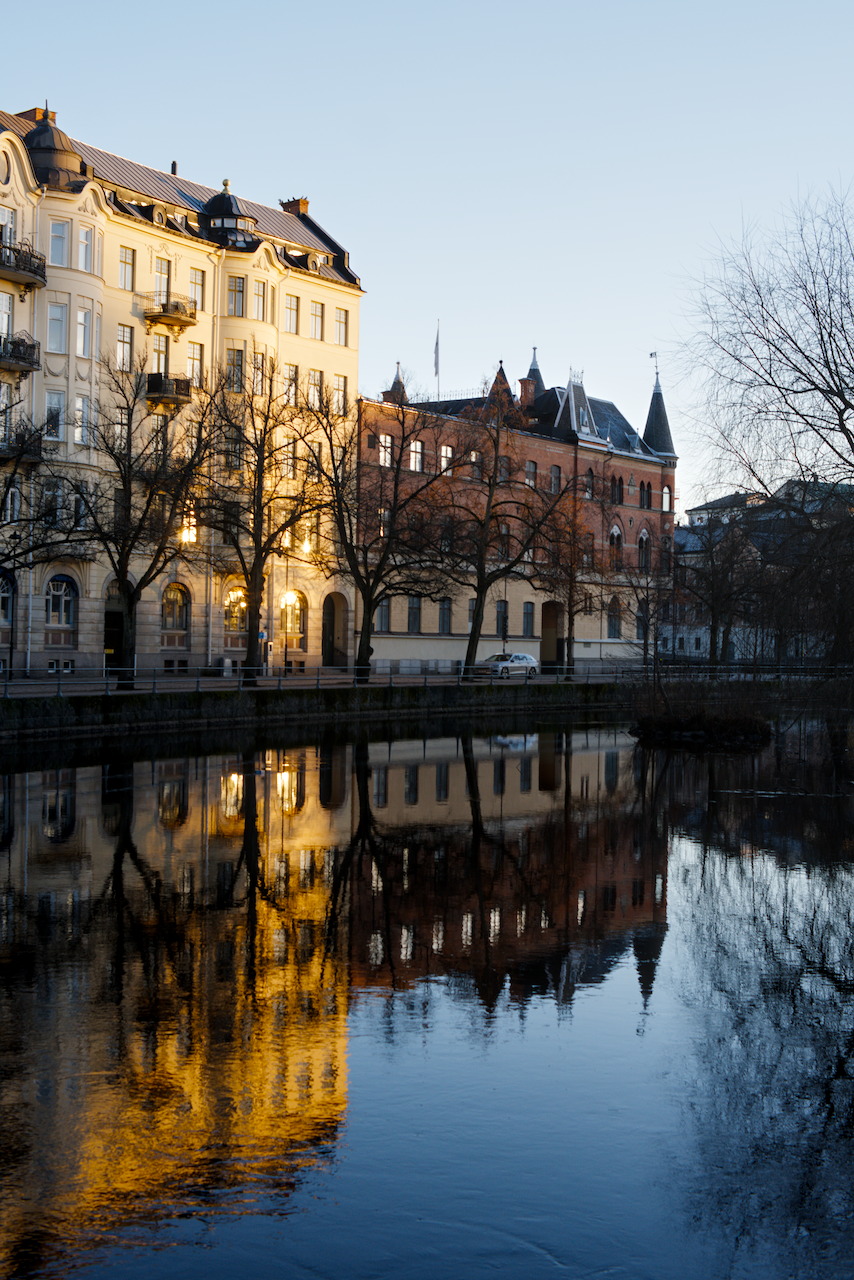
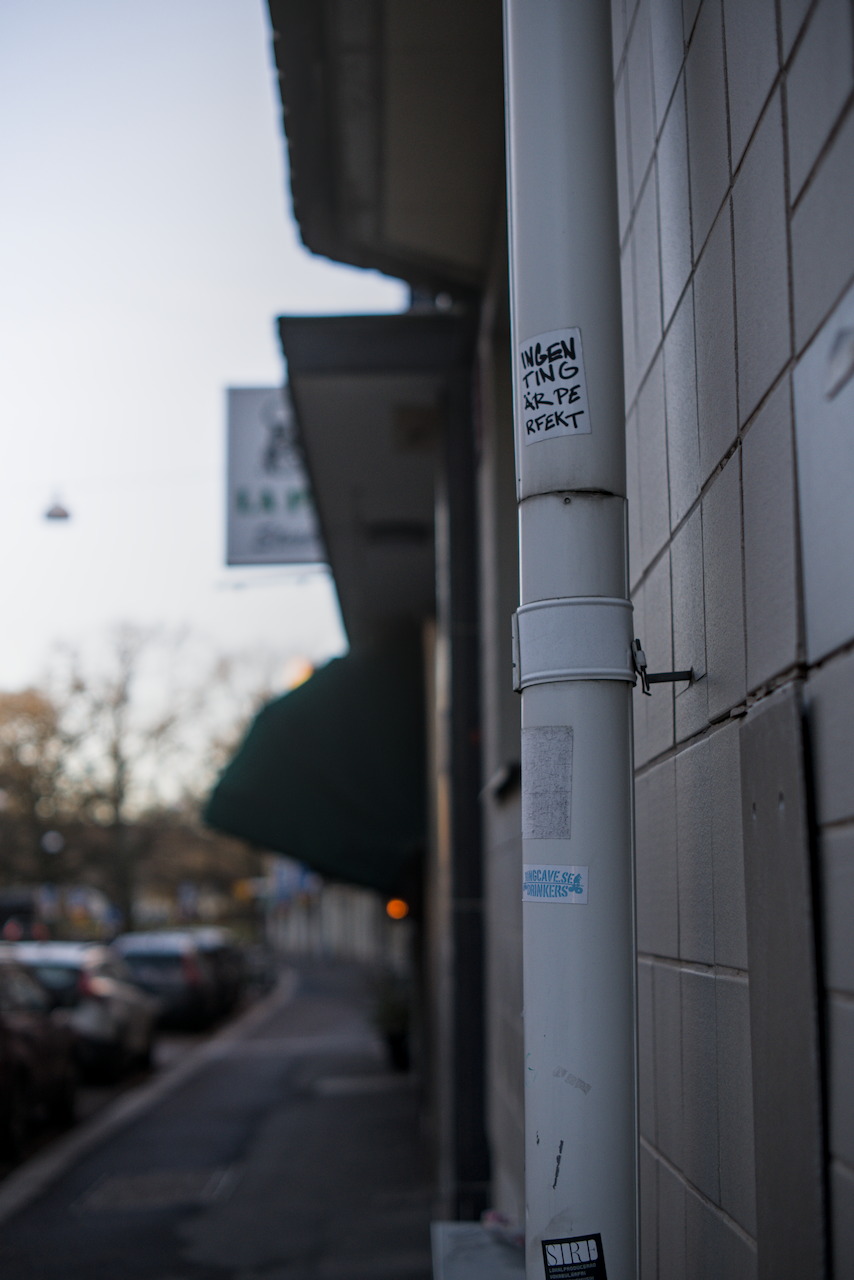
That sticker - "Ingenting är perfekt," Swedish for "Nothing is perfect" - seems almost too on the nose for a lens review. But I kept that shot because it captures something honest about using gear like this. The TTartisan is not perfect. The optics are soft wide open, flare is a real issue (or a bonus if you want flare), and the 39mm filter thread is a minor inconvenience. None of that stopped me from using it consistently for over two months.
Who this lens is for
If you shoot on a Sony APS-C body and want to try manual focus without committing to the adapter-and-vintage-lens route, this makes a strong case for itself. The build quality punches well above the price. The focal length is genuinely versatile. The tactile experience of using a fully mechanical lens - focus ring, aperture ring, no electronic anything - is something autofocus glass just doesn't give you.
It's not for photographers who need autofocus, fast-moving subjects, or pristine optical performance at wide apertures. It's for people who want to slow down a bit, get close to their subject, and shoot with something that feels like it was made to last.
I sold mine in February 2026 when I moved to a full-frame Sony A7C - not because the lens disappointed me, but because an APS-C-only lens on a full-frame body is a different proposition. If I was still shooting APS-C, it would still be in my bag. At around $80, it's hard to argue against trying it.